
governance. built or imposed
Build it, or someone builds it for you.
Most founder-led mid-market businesses treat governance the way they treat insurance — a cost with no visible upside, easy to defer indefinitely while the business is busy growing. And for a while, that deferral looks costless. Decisions get made quickly, informally, by people who trust each other. It works, right up until the business needs outside capital, a serious lender, or a genuine successor — at which point governance stops being optional and becomes a condition nobody negotiated on favourable terms.
Here’s the pattern worth internalising: every growing business eventually gets governance. The only real choice is whether it’s built voluntarily, early, and on the founder’s own terms — or imposed later, quickly, and on someone else’s.
Why governance feels unnecessary until it suddenly isn’t
In the early and middle stages of a founder-led business, informal governance genuinely works. The founder knows everything, decisions move fast because they don’t need a committee, and the trust between a small leadership team substitutes for formal process. Building board structures, financial controls, and documented decision rights at that stage can feel like slowing down a business that doesn’t need slowing down.
The problem is that this comfort is temporary and deceptive. The moment a business needs external capital — a PE investor, a strategic acquirer, even a serious bank facility — that outside party needs to trust the business’s numbers and decisions without having lived inside them the way the founder has. Informal governance, however well it’s worked internally, provides none of that trust. So the investor builds it themselves, as a condition of the deal, on a timeline that suits their diligence process, not the founder’s comfort.
What “governance imposed on you” actually looks like
This is the part most founders haven’t experienced firsthand, and it’s worth being specific about, because it changes the calculation considerably.
It happens fast, under pressure, and during the worst possible negotiating position. A term sheet arrives with governance conditions attached — a board seat, financial reporting requirements, approval rights over major decisions — and the founder is negotiating from a position where they’ve already decided they want the deal. That’s the worst possible moment to be building governance structures for the first time; every concession looks like giving something up, because it is.
It’s designed to protect the investor, not the business. Governance imposed by an external party is, reasonably, built around that party’s risk and information needs — not necessarily the structure that would actually serve the business best long-term. A founder who builds governance proactively gets to design a system that fits how the business actually operates. A founder who has it imposed gets whatever protects the counterparty.
It surfaces problems at the worst possible time. Due diligence has a way of finding every informal workaround, every undocumented decision, every place where the founder’s judgement was substituting for a system. Finding these during a live transaction, under time pressure, with a deal potentially at risk, is a dramatically worse experience than finding them eighteen months earlier with no deadline attached.
What building it early and voluntarily actually looks like
None of this requires a founder-led business to suddenly behave like a listed company. It requires a small number of deliberate, proportionate steps, built well before any external party is asking for them.
A genuine board or advisory structure, even a small one. This doesn’t need to be a formal statutory board with independent directors from day one. Even a small advisory group that meets quarterly, reviews real numbers, and asks real questions builds the muscle of being accountable to something beyond the founder’s own judgement — which is exactly what an investor will eventually expect to see functioning.
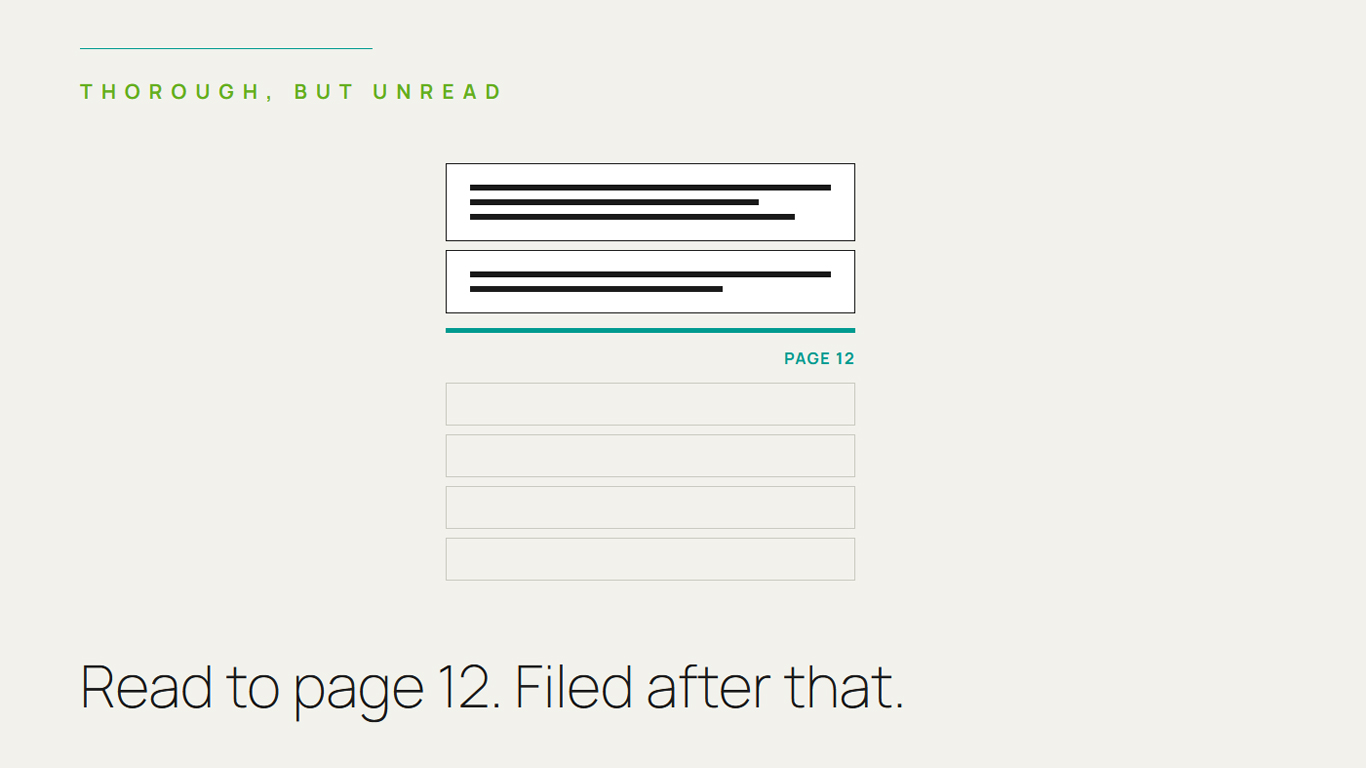
Financial reporting that’s accurate, current, and independently reviewed. Not glossy — accurate. A business that can produce clean, current, trustworthy financials on short notice has already cleared the single biggest hurdle in any diligence process. A business that has to reconstruct two years of numbers under deadline pressure has already put the deal, or the loan, at risk before negotiations even properly start.
Documented decision rights, ahead of any dispute. Who can approve what, up to what value, without escalation — decided and written down while everyone still agrees, rather than argued over for the first time when a disagreement actually arises. This is valuable for the business’s own internal functioning long before it ever matters to an outside party.
A credible successor or leadership bench, even an early one. Investors, lenders, and acquirers alike are all quietly assessing the same risk: what happens to this business if the founder is unavailable. A business that can answer that question confidently is worth measurably more, and negotiates from a stronger position, than one where the honest answer is “everything stops.”
The reframe worth making
Governance built voluntarily is cheap, gradual, and shaped on the founder’s own terms. Governance imposed later is expensive, sudden, and shaped entirely around someone else’s risk. The businesses that end up with the best deals — the highest valuations, the most favourable terms, the least painful diligence — are almost always the ones that did this work before anyone was asking for it, not in response to a term sheet’s demands.
If your governance still lives mostly in one person’s judgement rather than a documented system, that’s worth building on your own terms — before an investor builds it on theirs. See how our Finance & Governance practice works →