
THOROUGH, BUT UNREAD
Read to page 12. Filed after that.
Every quarter, someone on the finance team spends four days building a board pack.
Sixty-odd pages. Every function represented. Revenue by segment, cost by line item, a headcount summary, a project status grid, a risk register nobody’s updated properly since the last audit. Charts that took real effort — the kind where someone spent an evening getting the axis labels to align. A cover page with the company’s colours done properly, because somewhere along the way that started to matter too.
The board reads the first twelve pages. Maybe the cash position, the headline P&L, and whatever went wrong last quarter that’s already come up informally before the meeting even started. The other forty-eight pages exist mainly as proof that finance did its job — that nothing was left out, that no director can later say they weren’t told.
This isn’t a criticism of the finance team. Building that pack well is a real skill, and most finance teams do it as well as it can be done. It’s a criticism of what we’ve quietly decided “governance” means.
How the pack grows past the point of usefulness
Nobody sits down and decides to build a sixty-page pack. It happens incrementally, one quarter at a time. A director asks a pointed question in one meeting — say, about customer concentration — and finance adds a slide on customer concentration to the next pack, so the question is pre-empted. A different director raises something else the quarter after. Another slide. This continues for two or three years, and nobody ever goes back and asks whether the slide from eight quarters ago is still earning its place.
The result is a pack that has grown by addition and never been pruned by subtraction. Every individual slide can be justified — “someone asked about this once” — but the aggregate is a document that takes four days to build, that nobody has the appetite to read in full, and that has slowly stopped functioning as a decision tool and started functioning as an institutional memory of every question anyone has ever asked.
We’ve seen packs where an entire section exists because a director who left the board eighteen months ago used to ask about it every quarter. Nobody removed the section. Nobody wanted to be the one who decided it wasn’t needed anymore, in case it was needed after all.
The tell is in the questions the board actually asks
Watch a board meeting closely and you’ll notice something: the sharpest questions rarely come from the pack itself. They come from something the director already half-knew, or noticed in the market, or heard from a customer at a dinner the week before. The pack confirms what people suspected. It rarely surprises anyone into a genuinely different decision.
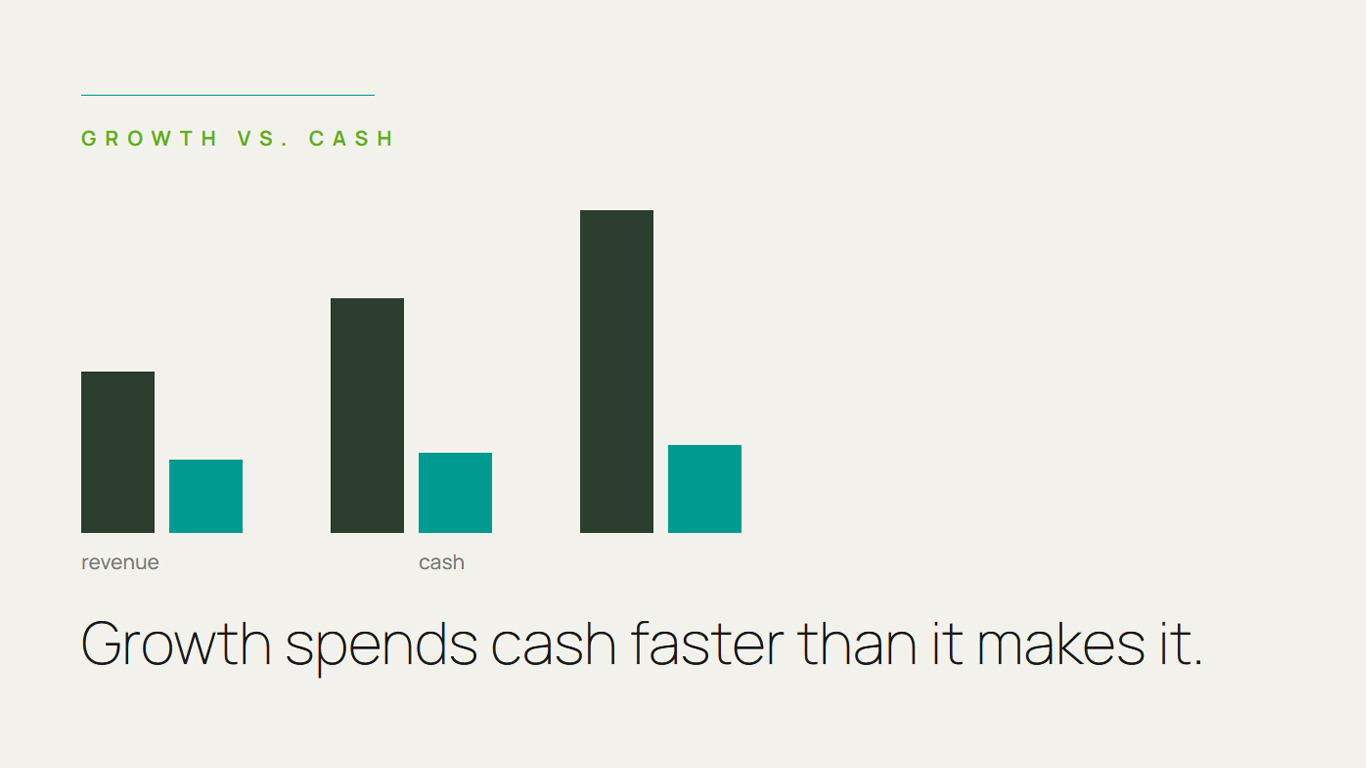
That’s the real failure, and it’s worth sitting with. A board pack’s job isn’t to document the quarter for the record. It’s to force a decision the business has been quietly avoiding — the underperforming region nobody wants to shut down, the customer concentration risk everyone’s noticed but nobody’s actioned, the working capital position that’s been drifting the wrong way for three quarters running while cash in the bank still looks fine.
If the pack doesn’t surface that decision clearly enough to make avoiding it genuinely uncomfortable in the room, the extra forty-eight pages haven’t bought you governance. They’ve bought you plausible deniability — a very expensive, very well-formatted way of saying “it was in the pack” after something goes wrong.
Governance built for PE readiness looks different from governance built for compliance
We see this most clearly with businesses preparing for a PE round or a strategic sale. In the run-up to due diligence, the reporting suddenly gets sharper — not longer, sharper. Fewer metrics survive the cut, but the ones that remain are exactly the ones a buyer’s diligence team will actually ask about: unit economics by segment, customer concentration expressed as a percentage of revenue rather than buried in a table, working capital trends over eight quarters rather than one, covenant headroom stated plainly rather than implied.
Everything else gets cut, not because it doesn’t matter in principle, but because a buyer’s diligence process runs on a small number of hard, specific questions, and a business preparing for scrutiny needs to already know the answers cold, in one place, without having to reconstruct them from a sixty-page archive.
That’s what good board reporting looks like even outside a transaction process. Not comprehensive. Decision-shaped. Built around the handful of numbers that would actually change what the business does next, not the full inventory of numbers the business happens to track.
A concrete way to test your own pack
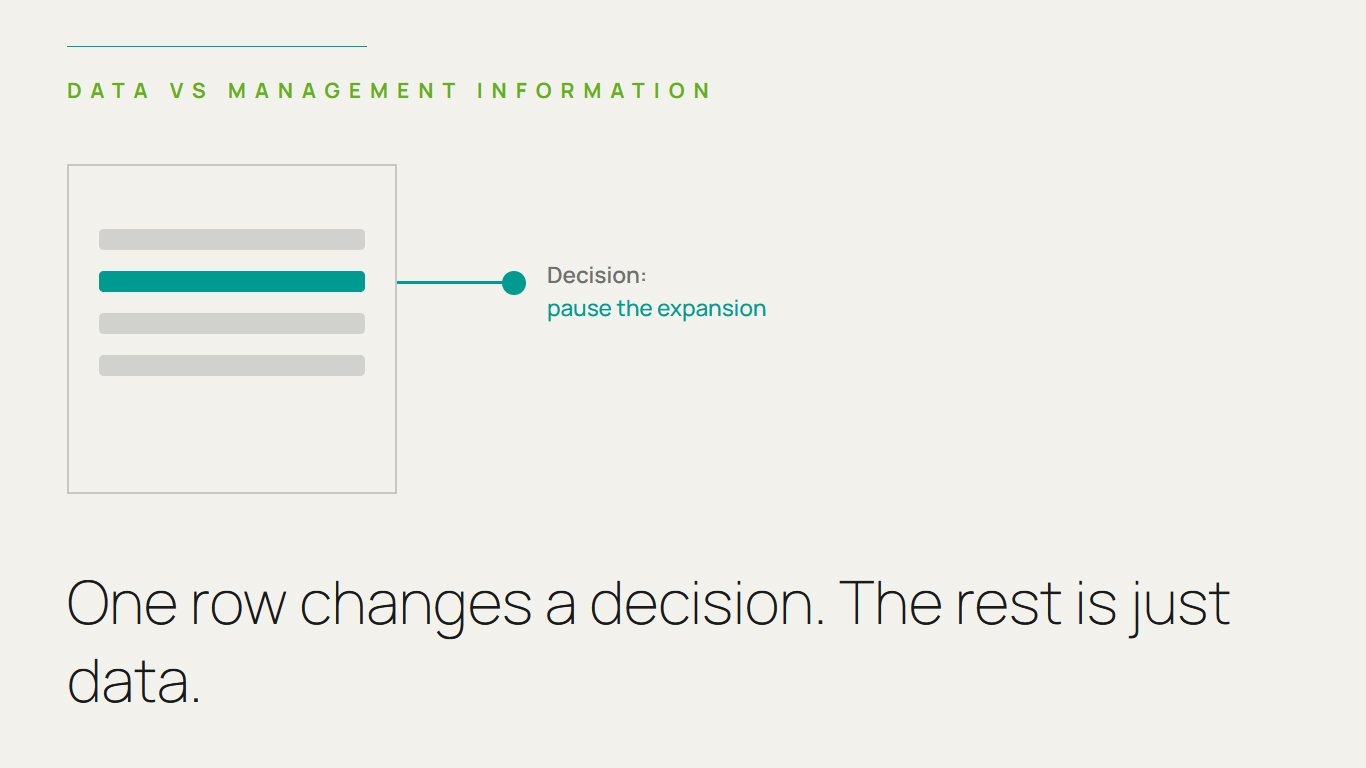
Here’s a exercise worth running on your own board pack, honestly, before the next meeting. Go through it page by page and ask, for each one: if this number moved sharply in the wrong direction next quarter, would the board actually change a decision because of it? Not “would someone notice” — would a decision change.
Most packs, run through this test, come out at somewhere between eight and fifteen pages that pass. The rest is context, history, and reassurance — useful, perhaps, but not what governance is actually for, and not worth four days of a finance team’s time to assemble every quarter when the business could be using that time for analysis instead of formatting.
What we actually recommend
Cut the pack in half, then run the test above on what’s left. Of the pages that survive, identify the three or four numbers that, if they moved the wrong way, would genuinely change what the board does next quarter. Build the pack’s structure around those three or four, front and centre, with everything else moved to an appendix the board can request if they want it — not something they’re required to sit through as a condition of getting to the part that matters.
This is uncomfortable to propose, because it looks like doing less. In practice it’s the opposite: it’s finance doing the harder work of deciding what matters, instead of the easier work of including everything so nobody can say something was left out.
A board pack that gets read in full, cover to cover, every single time, is usually a sign something’s wrong — either the business has too little happening to justify sixty pages in the first place, or the pack has been engineered to be unremarkable enough to get through without triggering a hard conversation. Neither is a compliment.
The businesses with genuinely strong governance don’t have thicker board packs. They have shorter ones, and much harder conversations in the room once the pack is done.