
loud, then quiet
Third time around, nobody’s fooled.
The first transformation programme gets genuine energy. People show up to workshops. They volunteer ideas. There’s a real sense that this time, something’s going to change.
The second gets professional cooperation. People attend, contribute what’s expected, and privately wait to see if this one sticks either.
By the third, you get compliance. Meetings happen. Forms get filled in. Nobody pushes back, and nobody believes in it either.
Why the diagnosis is usually wrong
Most leaders read this pattern as fatigue — as if the team simply ran out of energy for change. That diagnosis leads to the wrong fix: more communication, more town halls, more “bringing people along.” All reasonable, all mostly ineffective, because the problem was never energy.
The team isn’t tired. It’s informed.
What people actually remember
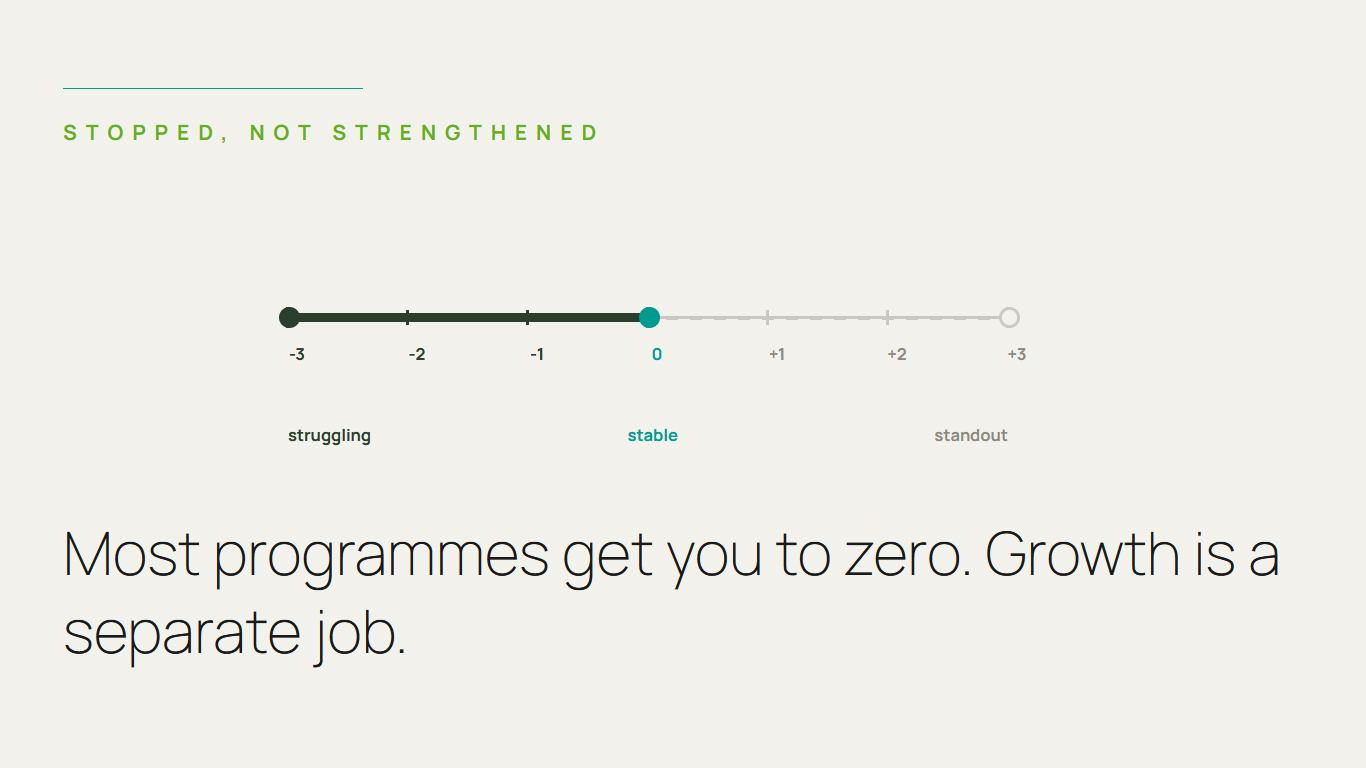
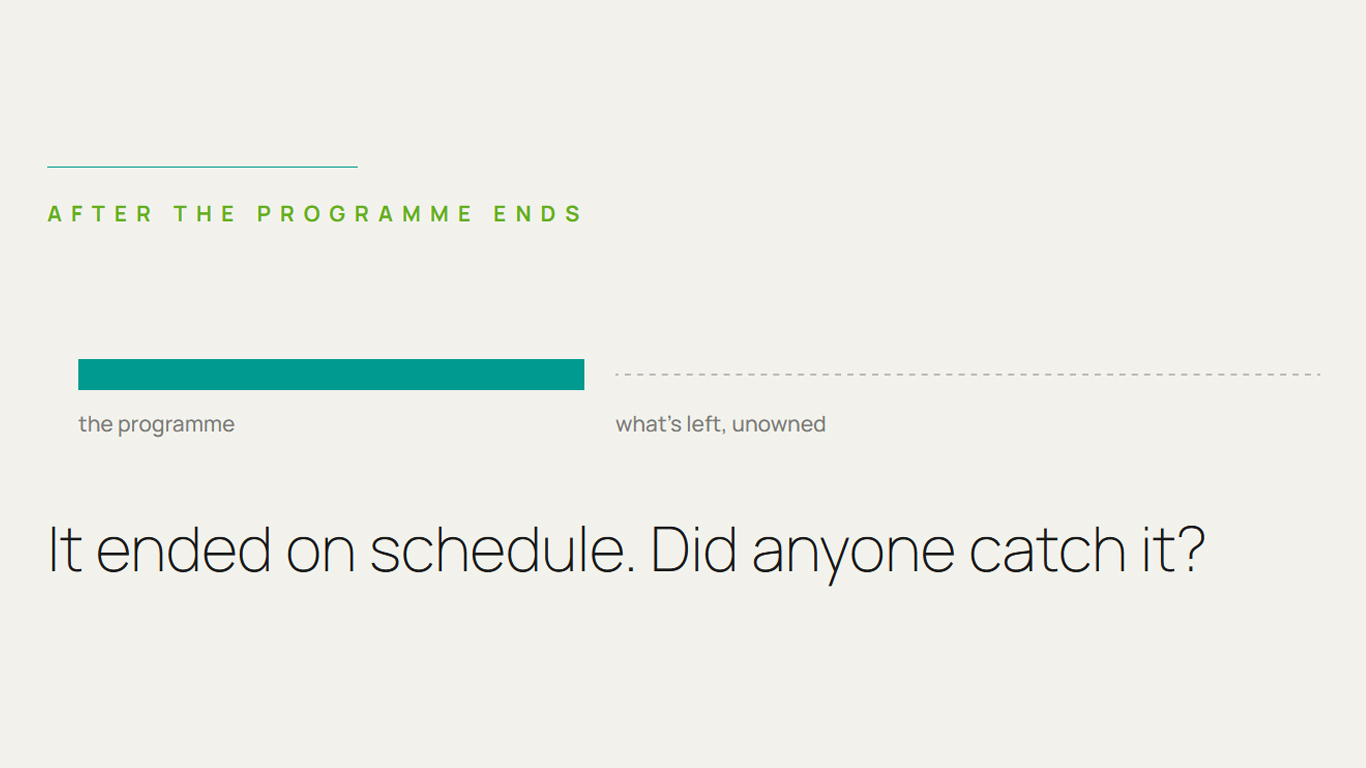
By the third programme, people have direct evidence of what happens after a transformation “ends.” In most cases, what happens is: not much. The steering committee stops meeting. The new process quietly reverts to the old one because nobody removed the option to. The consultants leave, the deck gets filed, and eighteen months later a fresh programme launches to fix problems that sound suspiciously like the ones the last one was meant to fix.
People aren’t cynical because they’re difficult. They’re cynical because they’ve been shown, twice, exactly how much a transformation programme changes in practice — and it wasn’t much.
That’s not fatigue. That’s a rational, evidence-based response.
Why the softness compounds
Each unfinished transformation doesn’t just fail on its own terms. It actively degrades the next one. Every programme that ends without a durable change lowers the credibility bar for the next launch, which means the next one has to work harder just to get the baseline cooperation the first one got for free.
This is why we push clients hard on finishing properly, not just starting well. A transformation that changes the org chart, the incentive structure, or the actual process — not just the language people use to describe their jobs — leaves behind evidence that this kind of thing works here. A transformation that ends with a workshop and a PowerPoint leaves behind evidence of the opposite, and that evidence gets remembered far longer than the programme itself.
What breaks the pattern
You don’t fix transformation fatigue with better change management collateral. You fix it by making the previous programme’s outcomes visible and durable before you launch the next one.
Concretely: before starting anything new, go back and check what happened to the last programme’s changes. Are they still in place? Did the new process survive, or has it quietly reverted? If it reverted, say so, explain why, and fix that specifically — don’t just launch a new initiative on top of an unaddressed old one and hope the team doesn’t notice the pattern. They will. They always do.
The reframe worth making
The businesses that don’t suffer from transformation fatigue aren’t the ones running fewer programmes. They’re the ones whose programmes actually stick, so each new one starts from a position of “the last one worked” rather than “here we go again.”
That’s not a communication problem. It’s a delivery discipline problem, and it’s fixable — but only if you’re honest about what the last three programmes actually left behind.
If your last transformation programme quietly reverted and nobody’s said so out loud, that’s the conversation worth having before the next one launches. See how our Transformation Programmes engagement works →