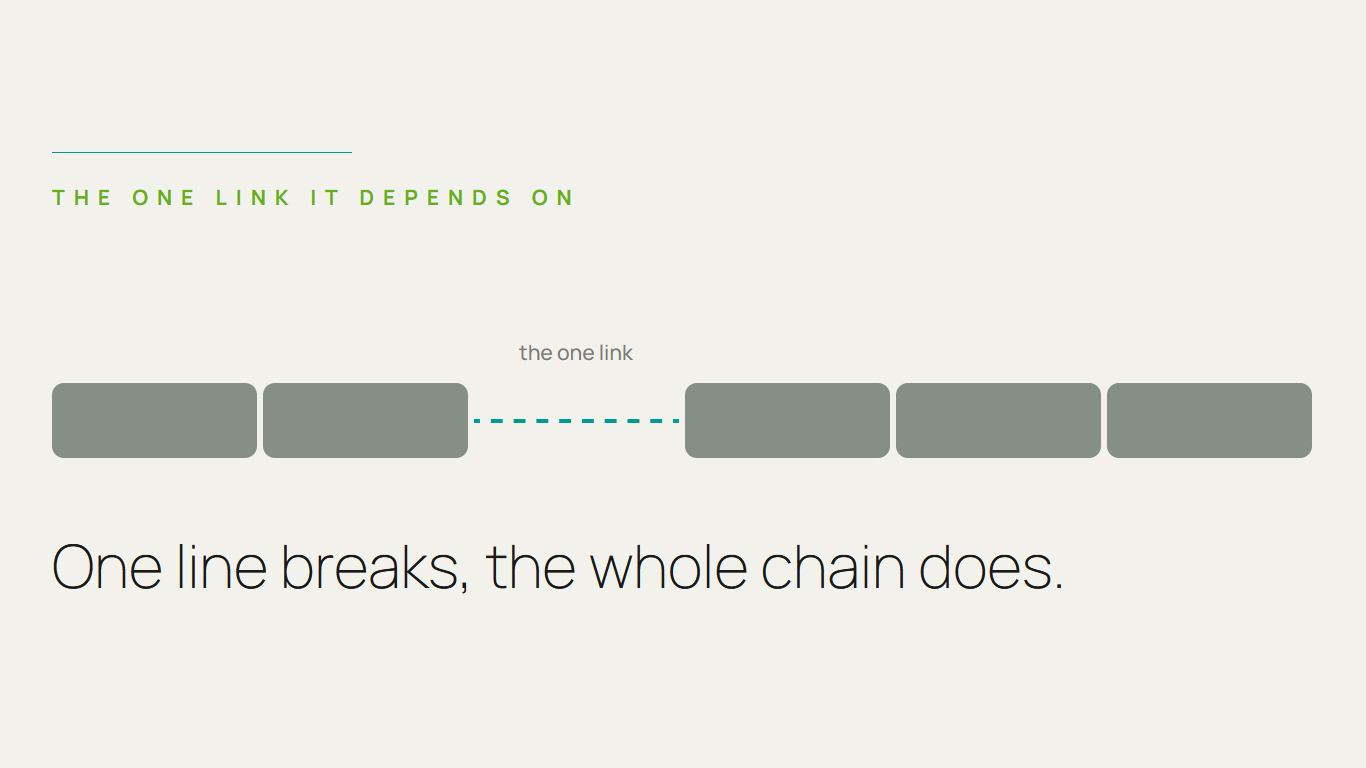

leads vs. positioning
Close, but not aimed.
“We need more leads” is one of the most common briefs a mid-market sales or marketing function receives, and it’s almost always the wrong diagnosis. The instinct is understandable — the pipeline looks thin, so the obvious fix is to fill the top of it faster. But in most cases we’ve seen, the business already has enough leads. What it doesn’t have is the right ones, and no amount of additional volume fixes that.
Why “more leads” so often misses the actual problem
More leads is an appealing answer because it’s actionable and doesn’t require anyone to question anything uncomfortable. Run more ads, buy a bigger list, push the team to make more calls — all straightforward, all measurable, all avoid the harder question of whether the business is actually clear about who it’s for.
But a lead is only valuable if it’s a genuine fit — someone who has the problem you solve, the authority or influence to buy, and a real reason to act now rather than eventually. Pour more volume into a funnel with a fuzzy definition of “right fit,” and you don’t get more good leads. You get more bad ones, at greater cost, consuming more of the sales team’s time chasing conversations that were never going to close. The pipeline looks busier. The close rate tells the real story.
The tell that it’s a positioning problem, not a volume problem
There’s a fairly reliable signal that distinguishes the two. If the sales team is getting plenty of conversations but a high proportion go nowhere — meetings that are pleasant, prospects who seem interested, and then silence — that’s rarely a lead-volume issue. It’s a sign the business is attracting people who are curious but not quite the right fit, because the message that brought them in wasn’t precise enough to filter for actual buyers.
Compare that to a business whose few leads convert at a high rate, but there simply aren’t enough of them. That’s a genuine volume problem, and more outreach or a bigger list is a reasonable answer. The two situations look similar from the outside — “we need more deals in the pipeline” — but they require opposite responses. Adding volume to a positioning problem makes it worse, not better; it just means more time spent qualifying and disqualifying people who were never a fit.
What weak positioning actually looks like
Positioning problems rarely announce themselves directly. They show up as a set of smaller symptoms that, together, tell the real story.
The pitch tries to be relevant to everyone. When a business isn’t sure exactly who it’s for, the natural response is to broaden the message so it might resonate with more people. The result is a pitch specific enough to convince nobody and vague enough to attract almost anybody — which is precisely how low-quality leads get generated in volume.
Different salespeople describe the ideal customer differently. Ask five people in the business who the best-fit customer actually is, and if the answers genuinely diverge — not in emphasis, but in substance — that’s a strong sign positioning was never actually agreed, just assumed. A sales team without a shared, specific answer to “who is this for” is, by definition, targeting inconsistently.
Deals that do close take unusually long or need heavy discounting. When positioning is sharp, the right buyer recognises quickly that the offer fits their specific problem, and the sales conversation is comparatively short. When positioning is vague, even a genuinely interested buyer needs convincing about relevance before price ever enters the conversation — which drags out cycles and pushes toward discounting as the fallback way to close.
The fix isn’t a better pitch. It’s a sharper answer.
Improving positioning isn’t primarily a messaging exercise, even though it eventually shows up in messaging. It starts with being uncomfortably specific about three things.
Who, exactly, is this for — and, just as important, who isn’t it for. A positioning statement that could describe half the market isn’t positioning. The willingness to explicitly name who you’re not the right fit for is usually the clearest signal that the definition of who you are right for has actually sharpened.
What specific, recognisable situation triggers the need. Not a vague pain point, but a concrete moment a genuine buyer would recognise about themselves — “we’ve just crossed 100 employees and our old process broke” is a trigger. “Businesses that want to grow” is not.
Why you, specifically, over the obvious alternative — including doing nothing. A sharp position doesn’t just explain why you’re good. It explains why you’re the right choice for this specific buyer’s specific situation, in language precise enough that the buyer recognises themselves in it immediately.
What changes once positioning is fixed
The immediate effect isn’t usually more leads — it’s often fewer, at least at first, because a sharper message stops attracting people who were never going to buy. What increases is the proportion of conversations that actually go somewhere, and the speed at which the right buyers self-select into the pipeline rather than needing to be convinced they’re relevant. That’s a much healthier problem to have than a full funnel that never quite converts.
If your pipeline feels busy but your close rate tells a different story, the fix is rarely more leads. See how our Sales & Revenue practice works →