
after the programme ends
It ended on schedule. Did anyone catch it?
A transformation programme can be, by every visible measure, a genuine success. Milestones hit, the new process launched, the metric moved, the final presentation well received. And within six months, the business has quietly drifted back toward how it used to operate — not through any single decision to abandon the change, but because nobody was actually left holding it once the people who built it were gone.
This is one of the most common and least discussed failure modes in transformation work, precisely because it doesn’t look like failure at the time. It looks like success, followed by an entirely separate, seemingly unrelated erosion months later that nobody quite connects back to the programme itself.
Why a successful programme can still fail to last
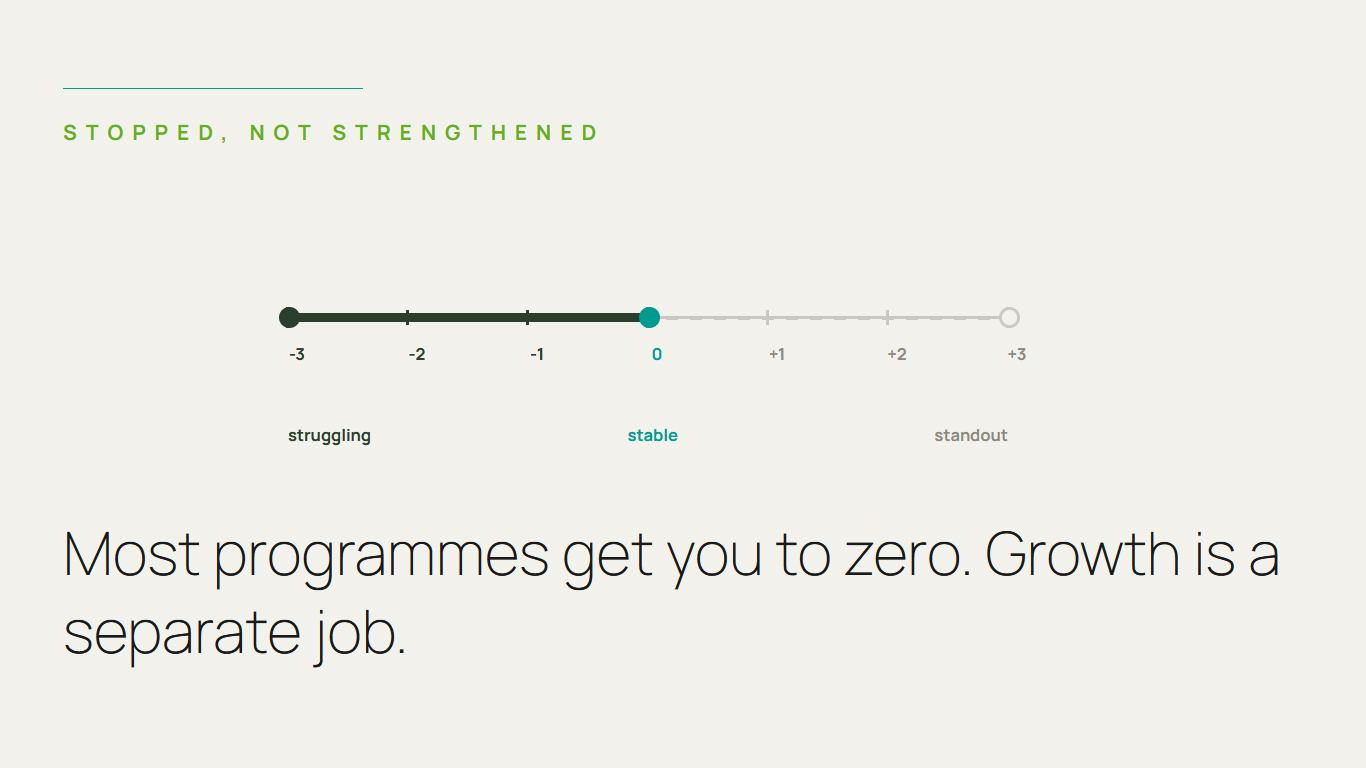
The uncomfortable truth is that delivering a transformation and making it durable are two different jobs, and most programmes are structured, measured, and staffed around only the first one. The programme’s success criteria are almost always about what gets built and launched — did the new process go live, did the metric move, was the milestone hit on schedule. Almost none of that criteria addresses whether anyone inside the business has genuinely taken ownership of keeping it running once the external team steps back.
Consultants and external programme teams are, by the nature of the engagement, temporary. If the only people who deeply understand why the new process works, how to maintain it, and how to adapt it as circumstances change are the people who are contractually leaving, the transformation was never actually transferred into the business. It was borrowed, briefly, and returned when the engagement ended.
The question that predicts whether it survives
There’s a single, uncomfortable question worth asking honestly partway through any transformation programme, well before it concludes: if the external team disappeared tomorrow, who inside this business would notice, care, and know what to do?
If there’s a clear, specific answer — a named person or team who understands the new way of working deeply enough to defend it, adapt it, and explain it to someone else — the programme has a real chance of lasting. If the honest answer is vague, or defaults to “well, everyone’s been trained on it,” that’s usually a sign nobody has actually taken ownership, because genuine ownership is specific, not diffuse. Training people to follow a new process is not the same as someone owning why it matters and fighting to keep it alive when the initial energy fades.
Why ownership so often goes unassigned
This isn’t usually negligence. It happens because, during an active transformation programme, the external team is naturally the centre of gravity — they’re the ones with the deepest expertise, the clearest view of the full picture, and the authority the programme itself grants them. Internal staff, quite reasonably, defer to that expertise during the engagement rather than pushing to take ownership of something still being actively built by people who understand it better than they currently do.
The problem is that this natural dynamic, if left unaddressed, persists right up until the engagement ends — at which point ownership doesn’t gradually exist inside the business, because nobody was ever deliberately handed it. It has to be assigned and built on purpose, well before the programme concludes, or the default outcome is that nobody actually owns it at all.
What building real ownership actually requires
Name an internal owner early, not at the end. Identifying, in the first month of the programme rather than the last, who inside the business will be accountable for the change once it’s live changes how that person engages with the entire programme — they’re building something they’ll own, not observing something being built for them.
Give the internal owner real involvement in decisions, not just updates. Someone who was consulted on major decisions during the programme understands the reasoning behind the new way of working. Someone who was only briefed on the outcome understands the instructions, but not the judgement behind them — which means they can follow the process but can’t adapt it when circumstances inevitably change.
Build in a genuine handover period, not a handover meeting. A single transition briefing at the end of a programme is not a handover. A deliberate period where the internal owner takes on progressively more responsibility while the external team is still present to support the transition gives ownership time to become real rather than nominal.
Check back after the programme has formally ended. The real test of durability isn’t visible at the close-out meeting — it’s visible three or six months later. Building in a genuine follow-up check, after the engagement has concluded, is one of the few ways to actually find out whether the transformation held or quietly reverted.
The reframe worth holding
A transformation programme’s real measure of success isn’t what it looks like on the day it ends. It’s what the business looks like a year later, once the energy, the external expertise, and the temporary focus that built it are long gone. That durability isn’t an accident of good delivery. It has to be built deliberately, with a specific person or team named to own it, well before anyone starts asking who’s supposed to be holding this together now.
If a past transformation effort in your business has quietly drifted back toward old habits, that’s usually a sign ownership was never genuinely assigned. See how our Transformation Programmes model works →