
data vs decision
More data isn’t the same as one decision
Most mid-market businesses today have more data than they’ve ever had. Dashboards, CRM records, sales reports, inventory systems, customer analytics — the raw material has never been more available or more affordable to collect. And yet, ask most leadership teams whether that data is actually changing what they decide, day to day, and the honest answer is usually no.
This is the part that gets missed in almost every “we need better data” conversation. The problem was never really data scarcity. It’s a decision problem wearing a data costume.
Why more data rarely produces better decisions
The instinct, when decisions feel uninformed or inconsistent, is to assume the fix is more information — a better dashboard, a more sophisticated report, another data source plugged in. And so businesses accumulate more of it, year after year, while the actual quality of decision-making barely moves.
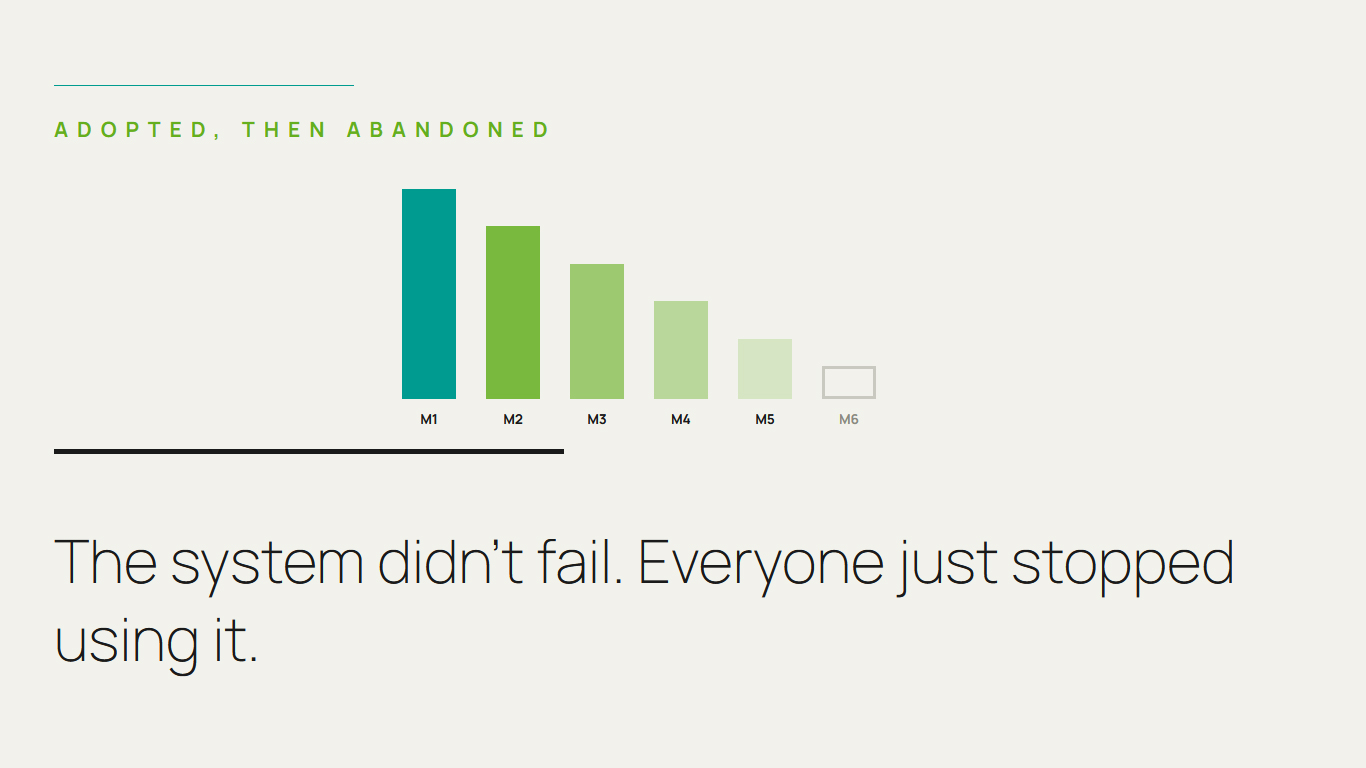
The reason is straightforward once you look for it: data doesn’t make decisions. People do, using data as one input among several — instinct, politics, habit, whoever argued loudest in the room. Adding more data to that mix doesn’t automatically improve the decision; it just gives everyone more material to selectively cite in support of whatever they were already inclined to do. A dashboard nobody has agreed to actually use as the deciding input is decoration, not decision-making.
The real gap: nobody defined the decision first
Here’s the pattern we see most often. A business invests in analytics, builds dashboards, hires someone to “own the data” — all before anyone has clearly named the specific, recurring decisions that data is actually meant to inform. The result is a lot of impressive-looking information with no clear owner, no clear trigger for action, and no clear threshold for what the numbers actually mean when they move.
Compare that to a business that starts from the other direction: name the decision first. Not “we should understand our customers better,” but “every month, we decide which three regions get additional sales headcount.” Once the decision is specific, the data requirement becomes specific too — what number, updated how often, reviewed by whom, triggering what action at what threshold. Data built to answer a named decision gets used. Data collected because it seemed like good practice generally doesn’t.
What “decision-ready” actually looks like
Building genuine data-driven decision-making isn’t primarily a technology project, even though it often gets treated as one. It’s an organisational discipline with four specific components.
A named decision-maker for each recurring decision. If a number can move and nobody is specifically responsible for acting on it, the number will be watched but not acted on. Ownership has to be explicit, not implied.
A defined threshold, agreed before the number is watched, not after. Waiting until a metric moves to decide whether that movement matters guarantees the interpretation will bend toward whatever answer is convenient at the time. Defining in advance what result triggers what response removes that flexibility — and removes a lot of the debate too.
A short, forced cadence for review. Data that’s available but not reviewed on a fixed schedule tends not to be reviewed at all, especially once the initial enthusiasm for a new dashboard fades. A short, non-negotiable review rhythm — weekly, monthly, whatever suits the decision — is what keeps the data connected to actual behaviour rather than becoming background noise.
A bias toward fewer metrics, chosen deliberately. More dashboards do not mean better decisions; they usually mean more places to look and more excuses to look at none of them closely. The businesses that actually use their data well tend to track a small, deliberately chosen set of numbers tied to specific decisions — not everything that can technically be measured.
Why this matters more as AI enters the picture
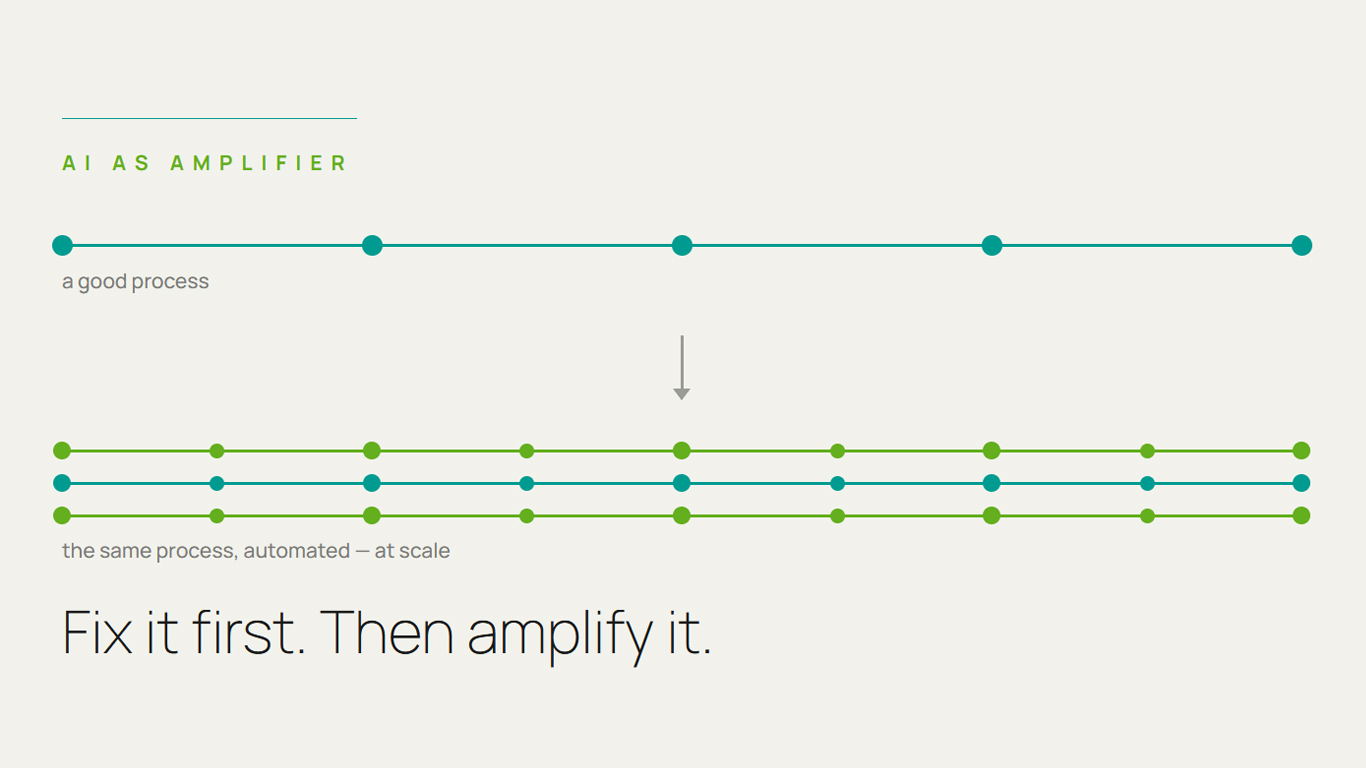
This gap becomes more consequential, not less, as businesses start layering AI and automation on top of their existing data. A model or a dashboard built on top of an undefined decision doesn’t fix the underlying ambiguity — it just produces confident-looking outputs for a question nobody had actually agreed how to answer. The businesses getting real value from newer analytical tools are, almost without exception, the ones who’d already done the harder work of defining their decisions clearly before the tooling arrived. The tool amplifies whatever clarity — or lack of it — was already there.
The reframe worth making
The question worth asking isn’t “what data do we need?” It’s “what decision are we actually trying to make, regularly enough that it’s worth building a system around?” Everything else — the dashboard, the report, the analytics investment — should follow from that answer, not precede it. A business drowning in data and still deciding by instinct doesn’t need a bigger data investment. It needs to name its decisions first, and let the data follow.
If your dashboards are full but your decisions still feel like guesswork, the gap usually isn’t the data itself. See how our Technology & Data practice works →