How to Know an Integrated Function Is Actually Working
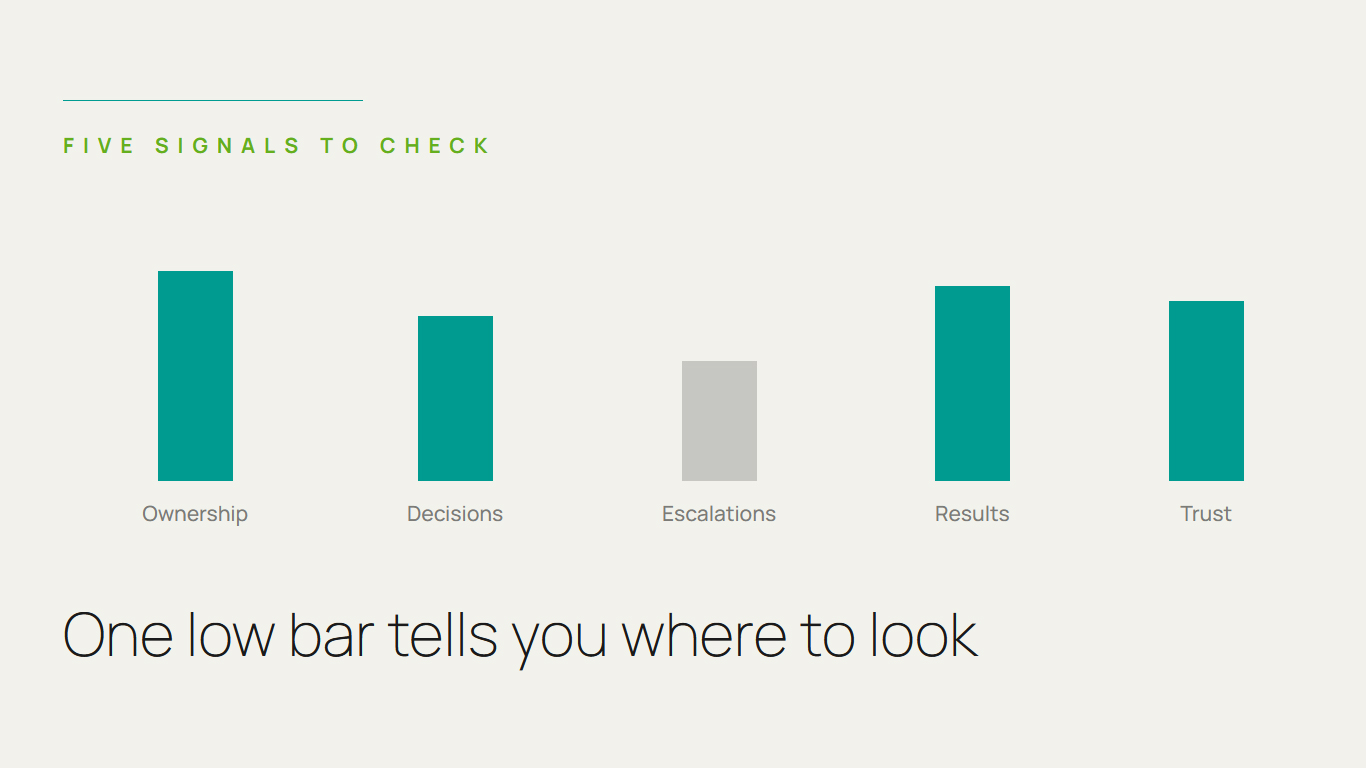
An integrated function can look busy and still not be delivering ownership. Here are five honest signals that tell you whether it's genuinely working.


An integrated function can look busy and still not be delivering ownership. Here are five honest signals that tell you whether it's genuinely working.
A star performer carrying most of your revenue isn't a strength to quietly celebrate. It's a concentrated risk most businesses don't notice until that person leaves.
Sometimes the gap isn't one senior seat. It's the whole team underneath it — and hiring just a leader into that gap doesn't close it.
More leads rarely fixes a stalled pipeline. Most 'we need more leads' briefs are actually a positioning problem wearing a volume complaint.
Most businesses treat sustainability as an expense to minimise. The ones pulling ahead treat it as a structural advantage competitors can't quickly copy.
Every business has a few 'that's just how we do it here' workarounds. Individually they look harmless. Add them up and they're a quiet, permanent tax on the operation.
Most mid-market businesses can name their leadership team and their frontline staff. Almost none can name who's actually ready to lead next.
Most B2B deals don't die on price. They die on inertia — a buyer who agrees with everything you've said and still doesn't move.
Many good mid-market businesses stop growing not because the market dried up, but because every decision still routes through one person.
A fractional CXO is not a part-time advisor. It's a senior leader who owns a function's results — just not five days a week.


